01 · Digital product · April 2024 – ongoing
SuperDuperAI
Designing an AI video generation platform as CPO
Sections
Overview
SuperDuperAI is a startup building an AI-powered platform that turns text ideas into video stories. Think of it as an AI director. You describe what you want, and the system generates a video with consistent characters, visual styles, and multi-platform formatting — all in under a minute. I joined as CPO and co-founder in April 2024, responsible for product design, UX, and product strategy. The team of six applied to Y Combinator’s S2024 batch.
Context
The AI video generation market was heating up in 2023–2024. Tools like Pika, Runway, and Descript were staking claims in different parts of the creative workflow. But none of them solved the full storytelling problem — going from text idea to a finished, character-consistent video story ready for social media. That gap was the bet.
SuperDuperAI’s answer was the complete pipeline. When I came on board in April, the team had a functional prototype generating hundreds of videos weekly. But the product experience was raw. Closer to a developer tool than something a creator would use daily. That’s where my role started.
My Role
As CPO, my responsibilities expanded beyond traditional UX design.
-
Product Design — I owned the Figma files for the product UI. Video editor, story generation flows, user-facing features.
-
Website Design — Collaborated on the marketing website in Framer with the team.
-
UX Strategy — Pushed for user testing, raised copyright concerns around AI-generated content, advocated for proper user research before scaling.
-
Frontend Direction — Involved in the decision to adopt React with Radix component library. This wasn’t about my coding preference — it was about what would scale for a team and what would let us iterate on design quickly.
-
Analytics — I was added to the Microsoft Clarity project to track user behavior and inform design decisions. Raw event logs are useless without observation.
The Product
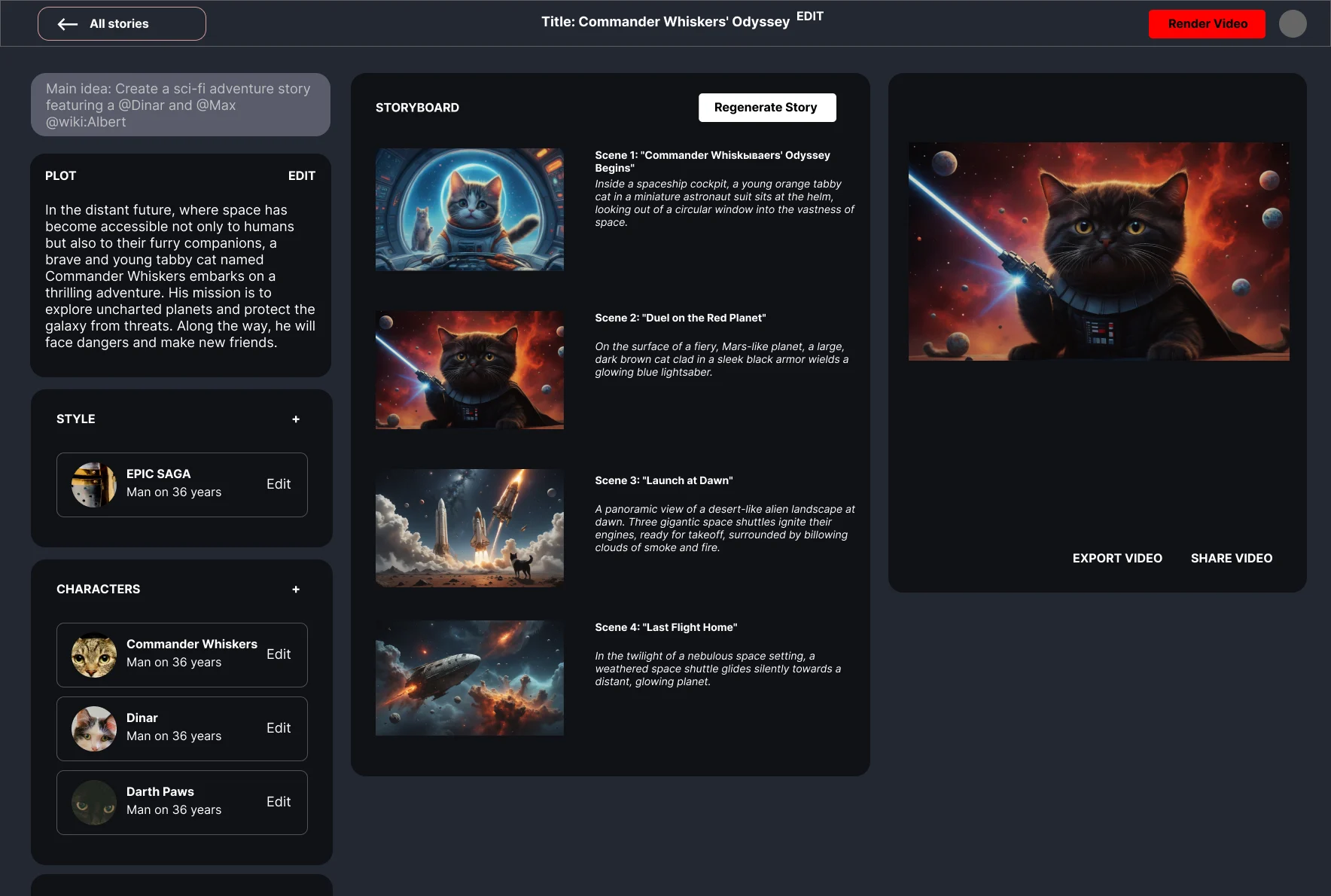
The core product — internally called “Director” — assembles a short video story from an idea through six stages.
- Script generation (OpenAI)
- Character creation via LORA models
- Prompt and image generation with inpainting
- Video animation (Kling, Minimax, Runway)
- Voice-over (Eleven Labs)
- Online editing with captions
LORA Character Training was the key differentiator — maintaining visual consistency across scenes. That’s technically impressive, but it’s also the feature that creates the most UX complexity. How do you explain machine learning to creators who just want their characters to look the same in every scene?
Storymaker Editor — The main editing interface with features like “Add Scene” for inserting scenes with automatic context and character consistency, and batch scene animation. This is where users spend most of their time, so this is where design decisions compound.
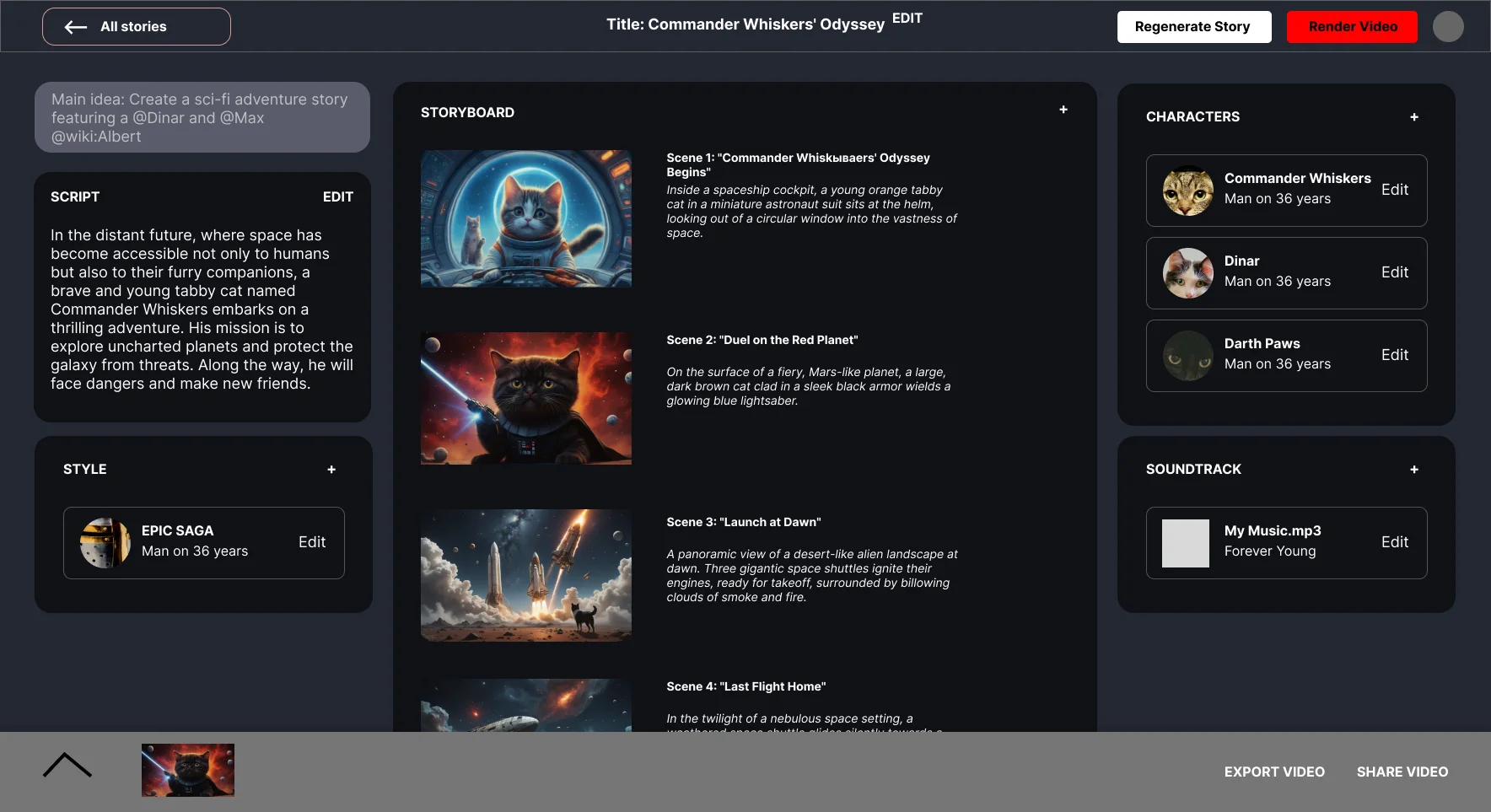
StyleLab — 87+ pre-built visual styles plus custom aesthetic builder. Let users start with templates or build from scratch. Both paths exist because different creators think differently.
Design Challenges
From Prototype to Product
The biggest challenge was transitioning from an AI research prototype to a usable creative tool. Scaling to creators and marketers required a fundamentally different UX. Built around visual preview and direct manipulation rather than prompt engineering. Early users — mostly researchers — loved typing prompts. Real creators wanted to see results immediately and adjust visually. Those are opposite interaction models.
Character Consistency as a UX Problem
LORA-based character training is technically impressive but creates a complex onboarding flow. Designing this as intuitive — rather than exposing ML complexity — was a core challenge. To be honest, I’m not fully satisfied with where we landed. It’s better than it was, but it still requires users to understand concepts that feel unnecessarily technical.
Multi-Platform Export
Content creators make the same story in 4+ aspect ratios. Instagram, TikTok, YouTube Shorts, LinkedIn. The export UX needed to handle reframing and quality optimization effortlessly. We built batch export for this, but aspect ratio switching remains a friction point.
Balancing AI Control and Creative Freedom
Too much automation feels like a black box. Too little defeats the purpose of using AI. The Storymaker editor needed to give users enough control to feel ownership while keeping the AI assistance valuable. We added more manual control points over time — editing individual scenes, adjusting character placement, modifying voice-over timing — but each control point adds complexity. It’s a constant tension.
Metrics & Traction
At the time of YC application in April 2024: 672 videos per month from 60 registered users and 799 anonymous users. Some TikTok and Instagram Reels content surpassed 1 million views.
What I Learned
Being a co-founder changes the design work. With strategy meetings, “UX design” expands to include business model decisions, hiring, investor presentations. You’re not just designing the product — you’re designing the company. That’s a different job than I’ve done before, and it matters.
AI products need more UX, not less. This surprised me. Users need more guidance and control points than in traditional software because AI behavior is less predictable. The more powerful the AI, the more the interface needs to explain what’s happening and give users ways to steer it.
Small teams move fast but need discipline. Without process, you can undo last week’s decisions in the next meeting. We added weekly design reviews and froze the UI on Fridays for a reason — you need some structure or velocity becomes chaos.
The space moves incredibly fast. What felt cutting-edge in mid-2024 was table stakes by early 2025. I’ve never seen a market change this quickly. It forces you to stay close to users and stay humble about what you think you know.